Showing posts with label Independent Component. Show all posts

Thursday, April 21, 2016

Blog 22: Independent Component 2

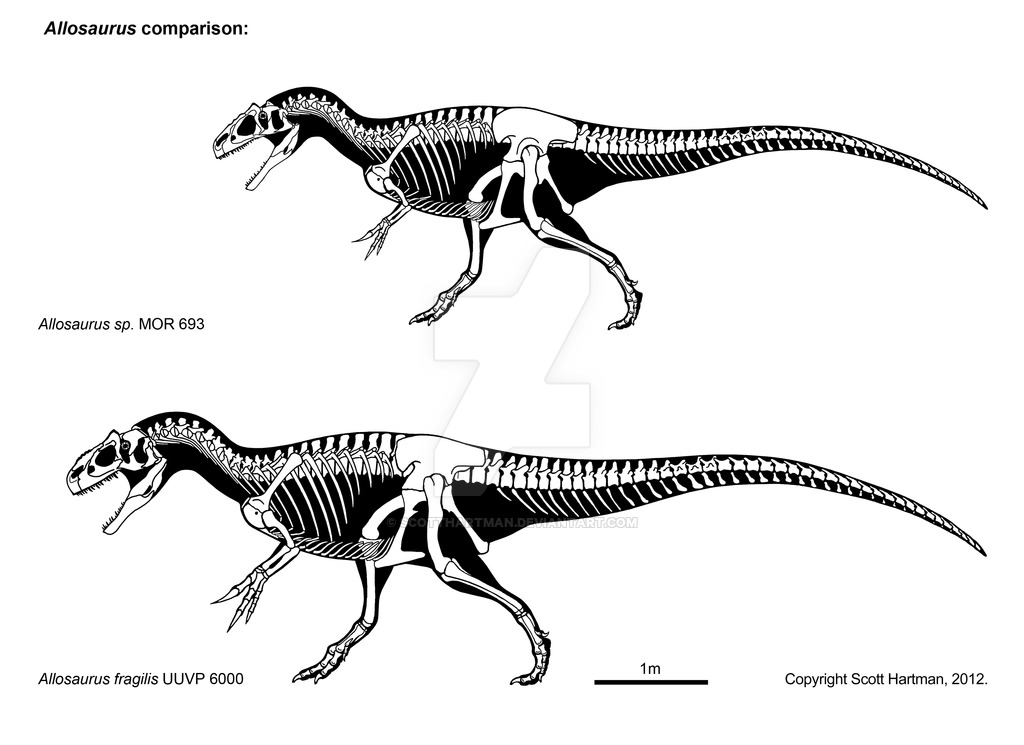
This is Alli the Allosaurus. Her model is based on specimen UUVP 6000. I'd like to give credit to the Paleo-Artist Scott Hartman for the skeletal drawing that he had posted on the internet that made this reconstruction possible. In the background, you can see my "Paleontological Workstation."
LITERAL:
(a) I, Santiago Hernandez, affirm that I completed my independent component which represents 70 hours of work.

(b)
Works Cited
Hartman, Scott. “Allosaurus fragilis UUVP 6000” Photograph. deviantart. Deviantart, n.d. Web. 13 Feb. 2016.
Madsen, James H. Jr. “Allosaurus fragilis: A Revised Osteology” Utah Geological Survey 109 (1976, reprinted - 1993): 1-163. Web. 14 Feb. 2016.
Ultimate Paper Mache. "New Paper Mache Clay Recipe." Online video clip. YouTube. YouTube, 10 Dec. 2009. Web. 10 Apr. 2016. < link >
Ultimate Paper Mache. "Paper Mache Clay Update Video." Online video clip. YouTube. YouTube, 5 Mar. 2012. Web. 10 Apr. 2016. < link >

(c) At this time, my Independent Component  #2 hours log has been updated.

(d) Explain what you completed.   

- Using measurements from reliable sources of information, I have created to the best of my ability a reconstruction of what the dinosaur Allosaurus fragilis would’ve looked like in life. This model was based on the real life measurement of fossils from the Allosaurus specimen UUVP 6000 and the composite skeleton found at the Raymond M Alf Museum

(e) Defend your work and explain the component's significance and how it demonstrates 30 hours of work.   Provide evidence (photos, transcript, art work, videos, etc) of the 30 hours of work.   
- Originally, I had planned on creating a sort of exhibit type display along with my reconstruction of Allosaurus fragilis, but unfortunately I couldn't find enough time to do anything else other than the physical reconstruction of Allosaurus. My essential question asks this: "How can a paleontologist best reconstruct the life of a prehistoric creature?" A large part of the life of many complex organisms, such as us humans, is how they look like. The appearance of an animal affects how it mates, how easily it is spotted by possible predators or prey, etc. To put it simply my independent component is significant because it has taken me on a journey that helps me see what its like when a paleontologist conducts research to write a paper and puts me in the shoes of paleontologists who are tasked with reconstructing the way dinosaurs looked. My component has also shown me how much is left to learn in the field of paleontologist, because as of far determining what color dinosaurs were as well as where as where they had fat or any excess skin is there's no fossil evidence or technology that can tell paleontologists either of those things and more. Additionally, this component has in many ways allowed me to explore all of my answers to my EQ. I had to make a semi-educated guess at what color Allosaurus was by taking into account the fact that Jurassic North America was dominated by forest habitat interrupted by clearings, analyze fossils to find the general shape and size of Allosaurus, and use its phylogenetic context and the comparative method to make the best attempt I was capable of at reconstructing the soft tissues (muscles, feathers, etc.) of Allosaurus.

- My independent component is evident of 70 hours of work because a lot of research and preparation went into putting my Allosaurus fragilis together. The process by which I arrived to my finished product is as follows:

First, I began by frantically looking through the internet for any measurements on Allosaurus and eventually I found a skeletal and muscular drawing by Paleo-Artist Scott Hartman. That drawing then gave me an Allosaurus to search for and I eventually found a scientific study done by paleontologist Dr. James H. Madsen Jr. The skeletal drawing that I based my model is shown below.


Once I had plundered both the scientific study and this drawing for all the measurements they could give me, which by the way took quite a long time since I had to record each measurement and make sure I was measuring in parallel lines. I then printed out an enlarged version of the above scale drawing and cut it out and taped each piece together.

This picture shows the enlarged version of the skeletal drawing that I made with Microsoft Word before I had put it together. This print out would serve as the basis by which I gave my Allosaurus its shape.
With the paper version of my Allosaurus created, I set out to cut out a piece of foam board so that I would have something solid to use as a base to give my Allosaurus shape. I couldn't fit the entire printout onto one foam board so I also had to tape the pieces of board together. A picture of me tracing the printout on a piece of foam board is provided below along with pictures of the pieces of foam board I cut out from that trace.

I had to trace the entire skeletal printout onto the foam board.
This is pretty much how all the pieces of foam I cut out for the main body looked like.
After tracing the drawing onto the foam board I had to cut out each piece. 
A side by side comparison of my completed foam cut and the printout. The original printout will be provided to Mr. Rivas.
Just like the body print out, I had to cut out some pieces of foam for several other smaller parts of the body, including another copy of the skull so that I could have and easier time making it 3D.

In addition to cutting out separate pieces of foam for the skull, I had to cut copies of the teeth, claws, ribs, legs, arms, and hands.
After the foam cutting was over with, I had to move on to creating the teeth that were going to be put onto my Allosaurus. For each little tooth, I had cut out a tiny piece of foam and label that. Also, I cut out pieces of foam where I could stick the teeth on so they can dry without being left on top of a surface. Each tooth was painstakingly covered with air dry clay and sculpted so that they would look like the steak knives they're described as looking like. 

With fingers wet (wet fingers are best for sculpting), I began smoothing out the surface of the clay so that it could resemble the tooth of 
A finished tooth under the scrutiny of my dinosaur crazed mind.
After doing the teeth, I was presented with the question of how I was going to make my Allosaurus's hands. Most of that was just testing out different pieces of wire, then scrapping the idea. Eventually I thought I'd give clay a try, but I noticed how heavy it was and figured that since I would be attaching the hand to the main body by tape that it was too heavy. I will be giving that hand as proof of this, because I had forgotten to take a picture of this process since I was so enveloped in my thoughts.

With all the foam and tiny parts done it was time to make the PVC frame that would support my Allosaurus! Because the day before I had traveled to the Raymond M Alf Museum to take width measurements of an Allosaurus they had on display, I had all the final measurements I needed to put Alli the Allosaurus together. I had made a diagram of how I was going to layout the pipes and using that diagram as a guide I started cutting out pieces of PVC pipe out and sticking them together with a glue that's made for keeping them together. While gluing them I was securing them onto my foam cut out of my Allosaurus using zip ties .This PVC system made it possible for Alli to stand on her own.


With this super nifty adhesive, I was able to make sure that my PVC frame was held together tightly.
In this picture, I am tying down the PVC frame to my foam cut outs. Notice how the leg is secured.

Here's a picture of me drilling a hole into the PVC so that I could get a better place to tie the zip tie to. To the left is my baby sister who is helping me by holding up Alli while I drill.
Alli finally stands proudly!!!
Now that the frame was completed, I needed to give Alli her shape and I decided to do that by stuffing her with crumbled pieces of newspaper and keeping that newspaper in place by wrapping it in masking tape. The process was pretty boring, but it did make me actively use my imagination because I knew little about the anatomy of muscles. 

As you can see here, the newspaper was used give Alli a general shape, but the tape is used to compress it and smooth out the shape. However, even with the tape the surface of Alli was rough so I needed a top layer that was smoother.
Again for this step of the process of making Alli, I didn't take much pictures, but the YouTube video links provided in the Works cited portion of this blog post show generally what the process of giving Alli her "skin" was like. The substance I used was called paper mache clay and it dries super hard and it was pretty easy to make. Using a join compound spreader that my dad lent me I spread this stuff all around Alli and then used plastic wrapping, like for food, to make the surface smoother with finger being pressed up against the plastic. 

These are some of the materials I used to make the paper mache clay.
In this picture, I am adding the finishing touches to the coat of paper mache clay that Alli has on her underside. It was hard to get to the back of her arms with the spreader so I was using wet fingers since they make sculpting so much easier.
The finished product of Alli's new coat of paper mache clay. I used some of it to sculpt her decorative horns in and to make a socket for her eyeballs.
Finally, Alli just needed a paint job and she would be finished. However, I had some problems with what colors should I put on her. Should I make her vibrantly colored like her avian descendants the birds, or should I be conservative with her color? In the end, what color dinosaurs were is the kind of thing paleontologists just don't know yet, so really any interpretation I make can be right. So I decided to go with a hybrid of the two approaches. I figured that female birds today are pretty dull colored, but some still have some sort of coloring, so I decided to make Alli's main coat of color a reddish brown and to give her bright green polka dots. For Alli's ornamental horns, I figured that they were probably used as a signal to say that "Hey I'm horny and ready to make babies if you're just the right male!" In that case, I figured that giving her some nice streaks of bright red would be great so she could advertise that fact. 

Here, I'm giving Alli her nice red streaks that I've mapped with pencil. The bright red would have easily advertised her sexual maturity and her youthful vigor.
Alli's first round of painting is done. The day after I finished her painting up. If you are interested, in seeing the finished product come to Mr. Rivas's room to see her in her Jurassic glory.
That sums up the process by which I reconstructed Alli the Allosaurus.

(f)How did the component help you answer your EQ? Please include specific examples to illustrate how it helped. 

- This component helped me see the value in my second and third answer to my EQ. The fossil data that I did find while I was researching for this project was vital in helping me reconstruct Alli. One example of that comes from the scientific study I found, Dr. Madsen's detailed pictures of specimen UUVP 6000 provided me with the next best thing to a fossil to get detailed information on the size and proportions of Alli's body. Another example of this was my trip to the Raymond M Alf Museum, their I used their mounted Allosaurus skeleton to get a feel of what Alli should look like in 3D and to measure it for her width. In terms of my answer three, this component helped me see the use in using both the comparative method and phylogenetic relationships. While I was stuffing Alli, I was having a hard to think of what to make her legs look like so I looked at the only other animal I had readily available that walks with its legs underneath it: humans. By observing the way my own legs look like and finding pictures of bird legs I gained some sort of idea of what Alli's legs might have looked like. I was also able to decide with a degree of certainty that Alli had feathers because of how closely related her branch of the Theropod family was to the part of that has raptors, Tyrannosaurs, and other feathered meat eaters and by finding out that one member of the Megaraptoa branch of the greater Allosaur family of Theropods had feathers. Indeed, this component taught me just how important it is to have fossils when reconstructing a prehistoric creature and how insightful the comparative method and phylogenetic relationships can be. 

Monday, February 8, 2016

Blog 16: Independent Component 2 Approval

This dinosaur here is Allosaurus and it will be the dinosaur that i want to reconstruct for my second independent component.
1.  Describe in detail what you plan to do for your 30 hours.

- For my second independent component, I would like to make a museum-style exhibit of a dinosaur called Allosaurus maximus (that's the scientific name, but in normal speak just call it Allosaurus). I want to make an updated and scientifically accurate reconstruction of Allosaurus's appearance and to provide a representation of one aspect of an Allosaur's life. Right now my idea, is that using the exhibit I will represent an Allosaur's parental behavior. I will also be adorning the exhibit with foliage that would be natural to an Allosaur's habitat.

2.  Discuss how or what you will do to meet the expectation of showing 30 hours of evidence.


- I will take photographs of my construction process, provide research justifying my reconstruction, and turn in a one page placard detailing reasoning for why I reconstructed Allosaurus the way I did.

3.  Explain how this component will help you explore your topic in more depth.


- Originally, my mentor suggested this project to me as a possible mentorship activity during my first interview with him and later on I visited the Raymond M Alf Museum, which had an exhibit of Allosaurus and a computer simulator showing a reconstruction of it. I didn't agree with how lizard-like the museum made Allosaurus out to be and so this independent component will also be a sort of scientific peer check of another paleontologist's rendition of this animal. My project EQ is: How can a paleontologist best reconstruct the life of a prehistoric creature. This idea allows me to reconstruct a few aspects of a prehistoric creature's life: its appearance, environmental setting, and parental behavior. I will have to explore a few techniques used by paleontologists in order to accomplish this reconstruction and so in that sense I will be able to further explore my topic. I've seen many TV documentaries on paleontology where paleontologists use various methods to uncover the lives of different prehistoric creatures, so I can look at those methods along with others from my research to help me revise the answers that I've already come up with and to possibly replace either of them if its better.

Friday, February 5, 2016

Independent Component 1


Literal
a. I, Santiago Hernandez, affirm that I completed my independent component which represents 30 hours of work. 

b. "The Trona Pinnacles." Ridgecrest Field Office. US Department of the Interior: Bureau of Land Management, 8 Oct. 2014. Web. 4 Feb. 2016.

State of California Department of Conservation. Jennings, Charles W., John L. Burnett, Bennie W. Troxel. Geologic Atlas of California - Trona Sheet. Map. 1:250,000. 1962. Web. 4 Feb. 2016.

Trona Pinnacles. Trona: Searles Lake Gem & Mineral Society, 2015. Print.

d. I participated in the "Mud trip" and "Pink Halite" trips made available in Trona, California where I collected crystals and prospected for fossils and hiked in the Trona Pinnacles. I later cleaned the Hanksite crystals that I collected from the Mud trip at home and then wrote an essay detailing the probability of their being fossils at the Trona Pinnacles and detailing the context of such fossils.

Interpretive
Normally when a Paleontologist prospects for fossils they have to use a tool like a pickaxe to extract the fossils from the surrounding matter.
Like a paleontologist, I had to keep a sharp eye out to discern a crystal from a worthless hunk of mud and rock. The picture above shows me holding the largest Hanksite cluster that I found.
Just the same as the mud trip, I had to keep an eye out for salt crystals in this brine pool. However, sometimes paleontologists just stumble upon fossils and similarly with the Pink Halite trip I had to let my fingers stumble upon the crystals.
Underneath the crystals I have on display is the ledge of salt where the Pink Halite crystals were more abundant. Sometimes paleontologists just find areas that are rich in fossils.
The point of my participation in the Mud and Pink Halite Trips of Trona's annual Gem-O-Rama was to simulate the work of a paleontologist because during these trips I had keep a close a eye to discern crystals from worthless chunks of salt or rocks. A paleontologist does this on a normal basis when they prospect for fossils.


Since all of my pictures of my hike on the Trona Pinnacles are from my point of view, this picture is what it was liked to watch over a ridge on one of the taller Pinnacles. The earth here was noticeably coarse and pebbly.

In this picture, it is easy to notice the vast distance in between different Pinnacles and it is also easy to see that earth around this Pinnacle is very pebbly.
During the hike, I found this tiny fragment of a bone, but according to my mentor it was just "last weeks dinner" and not a fossil. This shows how observant I had to be to even find anything like this among the rocks.
The crystals that I collected during Gem-O-Rama were created from the minerals deposited by an ancient lake called Searles Lake. The Trona Pinnacles were also a product of this lake, so I hiked and prospected for fossils in them as a further simulation of the work of a paleontologist. 


Here I am clearing the mud off my Hanksite crystals just as a paleontologist would clean a fossil that is inside a chunk of rock.
After cleaning it in brine, the Hanksite crystals look really nice. This specific specimen has a tinier conjoined twin on its side.

After my trip to Trona, I needed to clean my Hanksite crystals and so this relates to paleontology because paleontologists don't always find fossil fragments, sometimes they have to extract it within a chunk of earth and have to take it to a lab to thoroughly remove all the matrix. The Hanksite crystals simulated this because I pretty much had to take them home with some of the mud that I found them in.


The essay I wrote relates to how probable it would be to find fossils at the Trona Pinnacles and the context they. This essay serves to simulate how paleontologists publish papers on any number of topics related to paleontology that add to scientific knowledge. My essay does this by analyzing the sedimentological makeup of the area around the Trona Pinnacles and their formation to reach an understanding of how viable that environment might have been to fossilize a creature.

Applied
Paleontologists largely rely on fossils as pieces of evidence to explain a world long gone. In the case of my independent component, the crystals I collected from Searles Lake are pieces of evidence pointing back to minerals that were once part of a large lake. Also, another foundation of my topic that my independent component helped me understand was fossil formation. Fossils are formed after many years of compression underneath layers of sediments. An example of how my project allowed me to further explore this information is my essay because I had to apply what  I knew about the process of fossilization and use that and other information I've gathered about Searles Lake to synthesize a report on how likely fossils were to form around the Trona PInnacles. However, I think that my independent component helped me most with understanding an answer to my EQ because it showed me that a great way to reconstruct the life of an organism is to find out the context in which it was found. My hike and analysis of the Trona Pinnacles showed me this by showing me that if I did find any fossils near them that I can instantly assume that the creature was at home in an aquatic environment or that it died somewhere that allowed to be washed into the bottom of ancient Searles Lake.


Wednesday, October 7, 2015

Blog 8: Independent Component 1 Proposal

Only in my case, I will just leave them where I find them. Kind of sad isn't it. Darn you Department of the Interior (shakes fist angrily in the air).

1.  Describe in detail what you plan to do for your 30 hours.

- For my independent component, I plan on attending Gem-O-Rama in Trona California (it’s the event Mr. Holt talked to us about). Specifically, I plan on attending the morning events of Gem-O-Rama. The first morning event takes place Saturday morning and is called the "Mud Trip" where attendees dig through mud to find crystals of hanksite, trona, and borax; following the ending of that event, my plan is to visit the Trona Pinnacles where I plan to hike and hunt for fossils or possibly other types of minerals for the rest of the afternoon. On Sunday morning, I want to go to the "Pink Halite" event of Gem-O-Rama and then depart once again to the Trona Pinnacles in the afternoon; however, this time I will be there for less time, since the next day is school. After the trip, I plan on writing a paper about the viability of there being fossils at the Trona Pinnacles and what kind of environment these natural landmarks suggest ancient organisms lived in; this paper will later be peer reviewed and I will post the final draft on my blog as a google doc share-able link.

2.  Discuss how or what you will do to meet the expectation of showing 30 hours of evidence.

- To show evidence of my work, I plan on taking various pictures of myself doing the activities I just described, except the paper. I'm also entertaining the possibility of uploading several video logs of my daily progress and posting these videos as links on my blog, but I wish for the senior team to give me their opinions about that idea. For the research paper, I plan on posting a separate resources log into my working bibliography and on posting my pre-edited version of my paper as well as my final draft on my blog.

3.  Explain how what you will be doing will help you explore your topic in more depth.

- For the most part, the events I will participate in Gem-O-Rama closely reflect several parts of the acquisition of fossils. For example, the "Mud Trip" event parallels the jobs of excavators at the La Brea Tar Pits, who treat the fossils they find with specific chemicals to safely remove them from their surrounding matrix, since you also have to specifically use brine to remove the mud from the crystals without causing them harm. Also, the "Pink Halite" trip closely resembles the act of finding fossils in the field since Paleontologists need to keep a sharp eye out to find an exposed part of a fossil and it also shows the fact that you have to know where fossils to can be to even find any because if you recall the video Mr. Holt showed then one can see that the people looking through the salt flats were obviously going to find nothing. In short, the "Pink Halite" trip would help me see how useful knowing where fossils can be and being observant of the ground can lead to great finds and in the case of this trip, that find would be crystals in the stream Mr. Holt showed us. The trips to the Trona Pinnacles would help me explore my topic because I would literally look for fossils, which makes me apply my knowledge of what types of rock would host fossils and it would make me keep an observant demeanor to spot exposures. However, I won't be collecting the fossils I find since the land where the Trona Pinnacles are located on prohibits the extraction of fossils. The only artifacts I will take are any rock samples within the vicinity of the fossil that I could possibly use to uncover the type of environment that the fossilized organism lived in.  Furthermore, I will notate measurements of, observations of, and locations of any fossils I find on my trip which would reflect the field journal that most Paleontologists keep. In addition to the trips, the research paper would help me gain a deeper understanding of Paleontology by putting me in a position where I have to do both a fact based and observation based analysis of the Trona Pinnacles in terms of the topics I stated earlier. Overall, these activities would help me explore Paleontology more deeply by helping me explore what aspect of a Paleontologist’s work I would like to direct my overall project towards.